
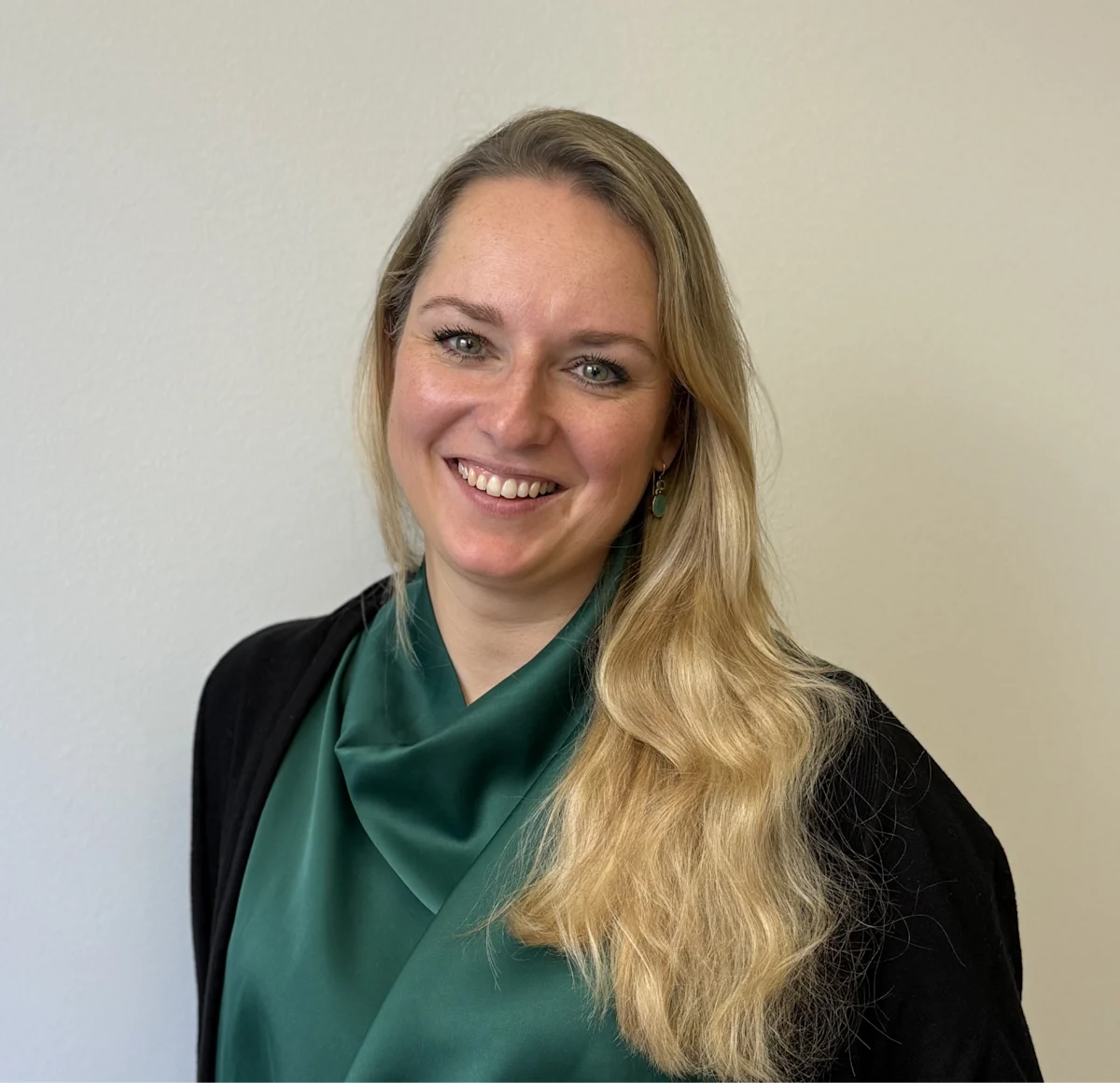
At Apaleo, we believe that great companies are built by people with unique stories and perspectives. Our team inspires us every day, and we want to share some of these personal journeys with you. Today, we introduce Maria Ritzer, Director of Platform Success at Apaleo. Originally, she planned to study aerospace engineering, but a school internship at a hotel opened the door to the world of hospitality.
After studying Hospitality Management in the Netherlands and working on international finance projects at Starwood in Brussels and Marriott in Asia, Maria’s path ultimately led her to Apaleo. Today, she brings these experiences into her leadership role. Her story is defined by curiosity, responsibility, and a genuine desire to understand things, both professionally and personally.
How did you first get into hospitality?
Actually, it wasn’t something I had planned. I attended a science-focused high school, completed my A-levels in mathematics, and took advanced physics courses, initially aiming to study aerospace engineering. At the same time, I explored other study options as a backup plan, which is how I came across Hospitality Management.
During high school, I did an internship at a hotel and quickly realised how much I enjoy working with people, especially in food and beverage. When I was accepted into a prestigious Dutch university, I decided to go for it. Before starting my studies, I spent six months at the Steigenberger Hotel in Hamburg, rotating through all departments. By the end of that period, I knew for sure that hospitality was the right path for me.
What role has finance played in your career?
Even during my studies, I realised that finance was my strongest area. In group projects, I usually took on responsibilities in the financial parts, which led me to apply for a finance traineeship at Starwood in Brussels.
Officially, I was part of the finance department, but I also worked on major renovations of our owned hotels. One large project that stands out in particular was the global SAP rollout, including the transition to new accounting standards. The whole project was very complex, and I learned so much about finance and accounting in hospitality during that time.
What did you gain from your professional experience in Asia?
My time in Asia was a real highlight. I lived in Shanghai for three years and was responsible for change management at Marriott. During that time, we migrated around 800 hotels to new finance systems.
I was especially fascinated by how differently people work, think, and learn, and how crucial it is to adapt on a cultural level. You can use the same transition framework when training hotels in China, India, or Australia, but the change management approach needs to be adapted to each context. That experience greatly shaped how I view collaboration and individual approaches.
How did you transition from hospitality to the tech world?
After my time in Shanghai, I returned to Germany highly pregnant and consciously took a break. During that period, I came across Apaleo’s website, which had a very creative story at that time. I immediately felt that this startup approached things differently.
I started in Customer Success, very hands-on at first with support, onboarding, and customer success. Thanks to my finance background, I quickly became the go-to person for various topics and gradually deepened my understanding of the product. It was important to me to truly understand our platform and the technology, so I could support customers in a truly impactful way.
How did you come to be part of Apaleo’s leadership team?
It all developed very naturally. From the very beginning, I reached out to Product, Leadership, and other teams to better understand their work and actively contribute. When the leadership team was reorganised, I was asked if I wanted to join.
For me, it was never about the title. What mattered most was how we could collectively develop Apaleo and bring together different perspectives to move the company forward in a sustainable way.
How do you manage the balance between leadership, work, and family?
I couldn’t do it without the support of my family. I’m a single parent and work full-time. Being able to work remotely gives me the flexibility I need to balance family life with my professional responsibilities. At the same time, personal interaction is very important to me, which is why I regularly come into the office in Munich.
I believe good hybrid models really work. They give employees the freedom to shape their workday so that it fits their life, not the other way around, even in leadership positions.
How do you spend your time outside of work?
Being active and spending time in nature help me unwind. I love via ferratas, any kind of watersports and spending time with my family. Movement and sports have always played a big role in my family, and that continues to this day.
I’m also very family oriented. Having my family close by gives me a lot of support. I’m passionate about cooking and baking, which has always been an important part of my life, both professionally and personally.


